Terroir: Southern Slopes of Épernay
The Vollereaux Vineyard, in Pierry,
Southern Slopes of Épernay
Sustainable Viticulture in Champagne
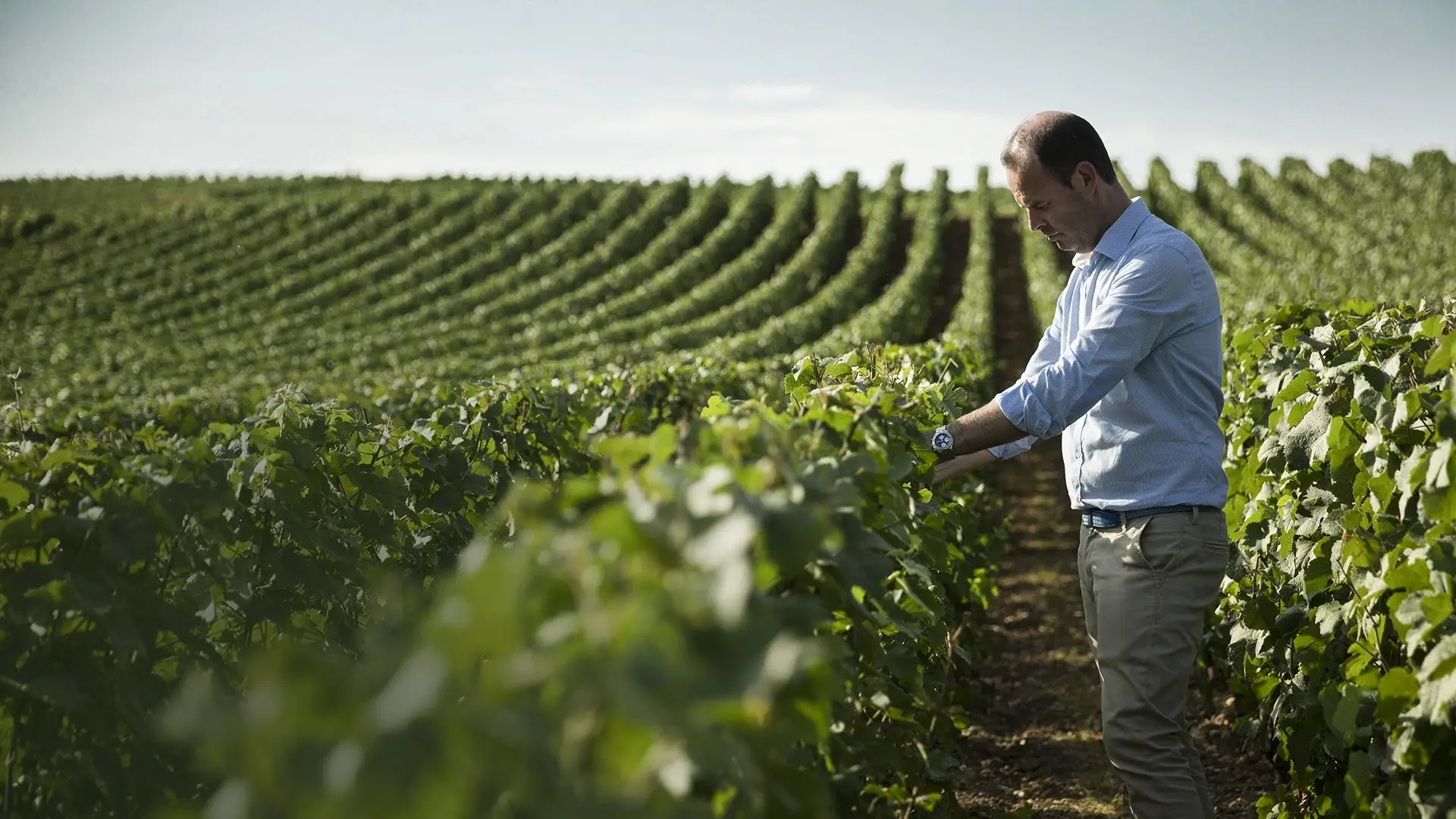
The Champagne Vollereaux vineyard spans 40 hectares spread across 17 municipalities, between the southern slopes of Épernay, the Marne Valley, and the Sézannais region, particularly around Pierry, Épernay, and Chavot. Planted with the three Champagne grape varieties—Chardonnay, Pinot Noir, and Meunier—on chalky and clay-limestone soils, this family-owned vineyard is committed to sustainable viticulture, with approximately 80% of the estate certified as High Environmental Value (HVE).

High Environmental Value
Level 3
· 80% of the vineyard is certified
The Vineyard at a Glance
40 hectares spread across 17 municipalities, including Pierry, Chavot-Courcourt, Monthelon, Moussy, and as far as the Sézannais region.
Chalk and clay-limestone soils, typical of the Champagne region.
Three grape varieties: Chardonnay, Pinot Noir, and Meunier, complemented by forgotten varieties replanted in 2019: Pinot Blanc, Pinot Gris, and Petit Meslier.
A family-owned vineyard with 80% of its land certified as High Environmental Value (HVE).
A family-run vineyard
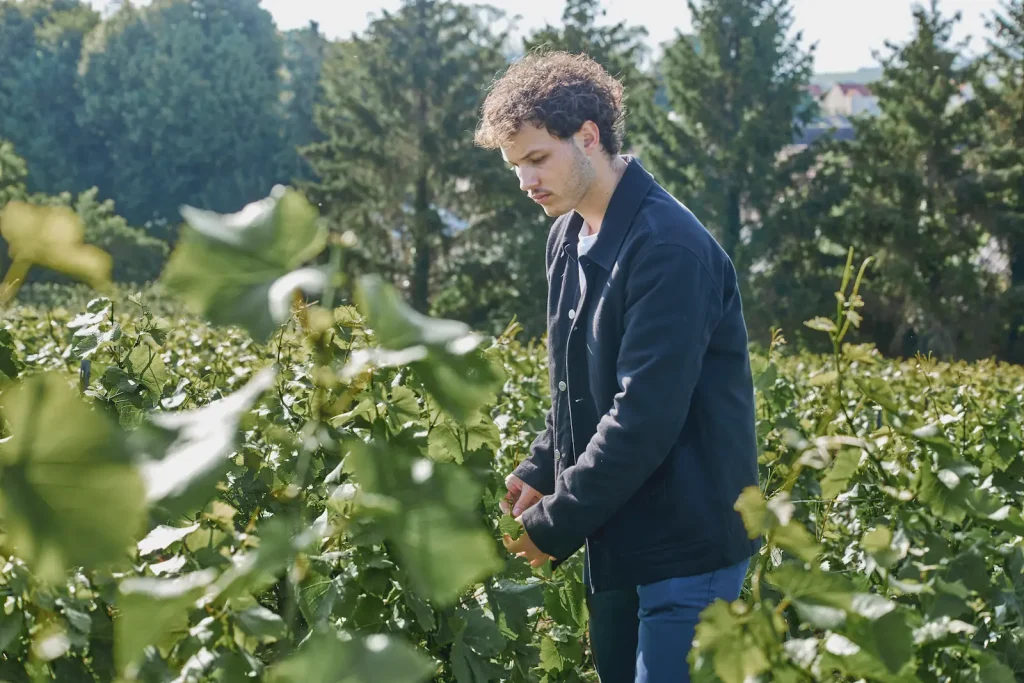
Today, the vineyard is a family affair, with the entire family working together to tend it. Max, representing the seventh generation, oversees the vineyard operations in particular, alongside the rest of the family. It is this direct connection to the vines—working closely with each plot—that ensures the consistency of the estate’s style, from the soil to the bottle.
The three Champagne grape varieties
The vineyard grows the appellation’s three grape varieties: Chardonnay, Pinot Noir, and Meunier. Depending on the plots and cuvées, they are either blended or vinified on their own, ranging from Blanc de Blancs (100% Chardonnay) to Blanc de Noirs (100% Pinot Noir).
Chardonnay
Pinot Noir
Miller
Forgotten grape varieties—
—replanted in 2019
- Pinot Blanc
- Pinot Gris
- Petit Meslier
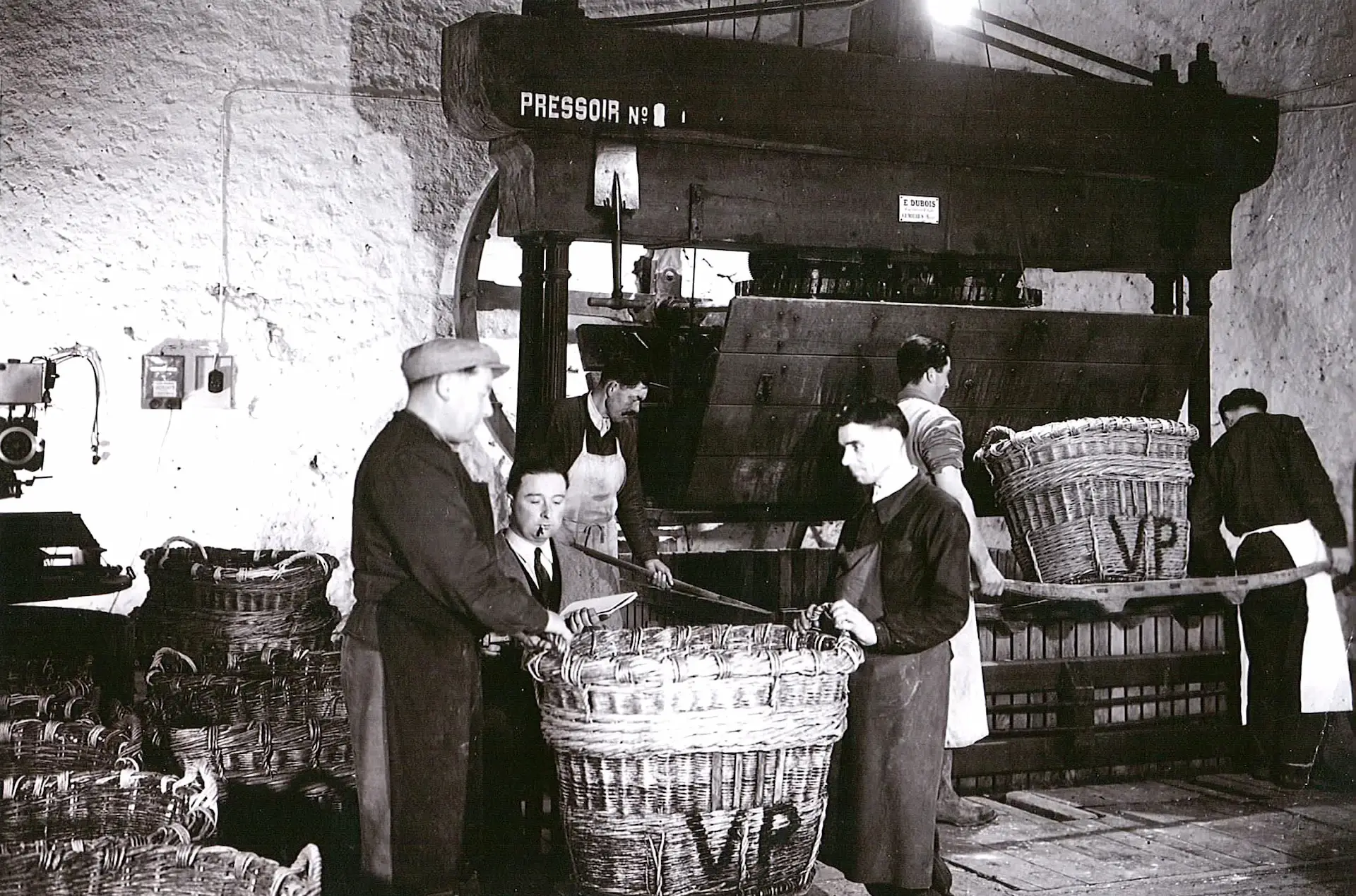
In 2019, the House replanted grape varieties that were once used. Pinot Blanc, Pinot Gris, and Petit Meslier are among the authorized grape varieties of the Champagne appellation. For a long time, these varieties were set aside because of their susceptibility to frost and their low yields.
As the climate and farming practices evolve, it is interesting today to highlight the flavor profiles of these grape varieties.
Today, three plots, each measuring 0.25 ha, allow us to produce a cuvée using indigenous yeasts and without malolactic fermentation, resulting in distinctive wines with their own character and typicity.
The champagne will need to age in the cellar for 5 years to achieve a balance of freshness and fruitiness.
Frequently Asked Questions
What is HVE certification?
High Environmental Value is the highest level (Level 3) of environmental certification for farms in France. It assesses biodiversity, the reduction of pesticide use, fertilization, and water management.
Is the Vollereaux vineyard organic?
Part of the vineyard is HVE-certified, a government-recognized environmental certification that is distinct from the Organic Farming label. The HVE certification recognizes the farm’s overall environmental performance.
How big is the vineyard, and where is it located?
40 hectares spread across 17 municipalities, notably around Pierry, Épernay, Chavot-Courcourt, Moussy, and as far as the Sézannais region.
What grape varieties are grown?
The three grape varieties of Champagne: Chardonnay, Pinot Noir, and Meunier.
What does “Premier Cru” mean in Champagne?
This classification recognizes the villages whose terroirs are among the highest quality in the appellation. The company’s headquarters, in Pierry, is classified as Premier Cru.
Continue the tour
Wines made from Chardonnay, Pinot Noir, and Meunier.
Two-century-old wine cellars, tastings, and wine-tourism experiences in Pierry.
An independent, family-owned champagne house in Pierry since 1805.